Top 10 Organic Supplements Produced in Mexico
- 1. Spirulina and Chlorella Powders
- 2. Nopal (Prickly Pear Cactus) Capsules and Powders
- 3. Moringa Leaf Powder and Extract
- 4. Chía Seed and Chía Oil
- 5. Agave Inulin and FOS (Fructooligosaccharides)
- 6. Hibiscus (Jamaica) Extract
- 7. Vanilla Extract and Powder
- 8. Turmeric (Cúrcuma) Root Powder and Extract
- 9. Guava Leaf Extract
- 10. Sea Moss (Gracilaria and Eucheuma Species)
- Key Due Diligence Points When Sourcing from Mexico
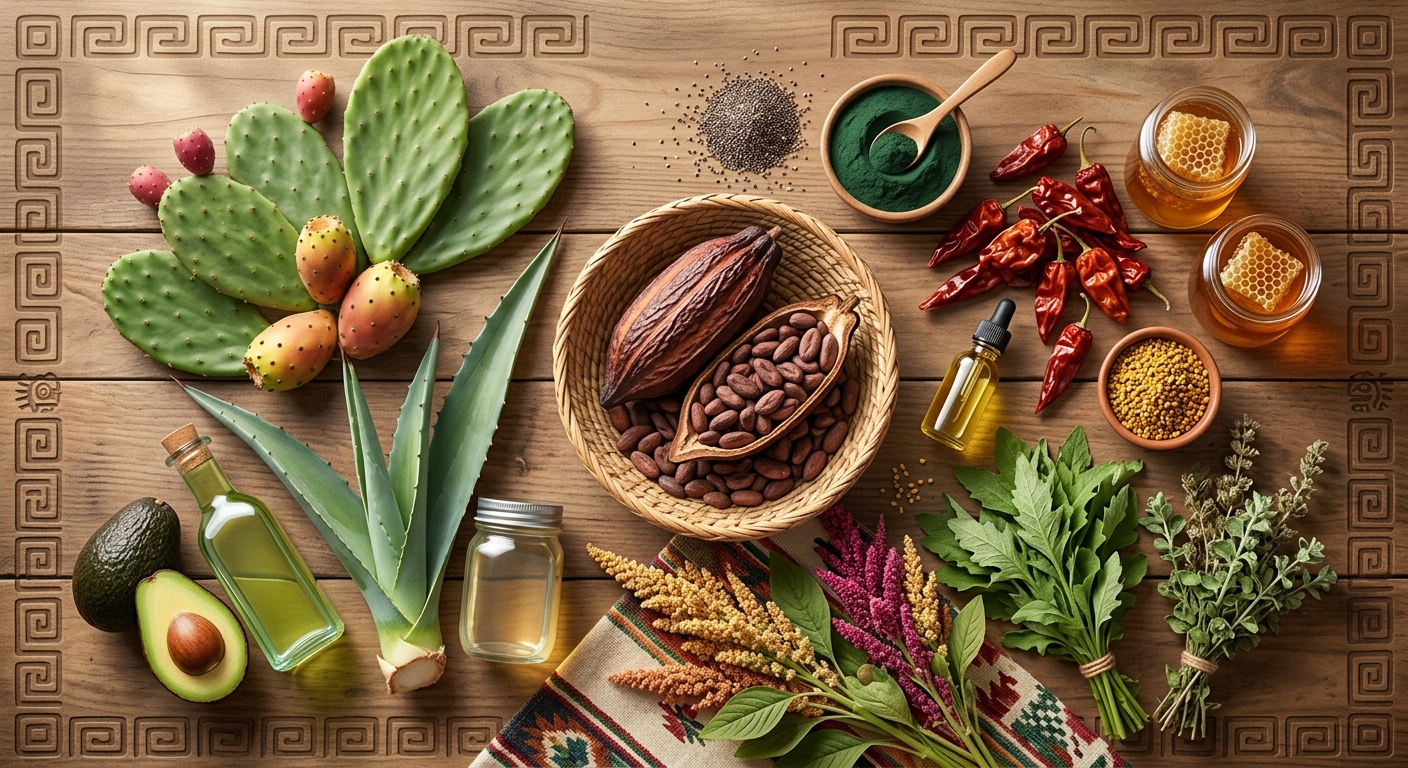
Mexico has become a practical sourcing destination for U.S. supplement importers — shorter lead times than Asia, no transoceanic freight costs, and a growing number of NOM and USDA-NOP certified manufacturers. If you're evaluating Mexico as a supply chain option for organic supplements, here are the ten product categories with the strongest manufacturing infrastructure.
1. Spirulina and Chlorella Powders
Mexico's climate — particularly in Sonora and Baja California — supports large-scale algae cultivation. Several producers operate certified organic spirulina farms and process bulk powder and tablets on-site. These are high-demand SKUs for private label supplement brands.
2. Nopal (Prickly Pear Cactus) Capsules and Powders
Nopal is native to Mexico and grown at commercial scale across Jalisco, Zacatecas, and San Luis Potosí. Manufacturers offer organic-certified powder, extract, and encapsulated formats. MOQs for bulk powder typically start around 25–50 kg.
3. Moringa Leaf Powder and Extract
Mexico is among the top moringa-producing countries in the Western Hemisphere. Organic moringa leaf powder is available in bulk bags, capsules, and tablet formats. Buyers looking for USDA-NOP certification should confirm whether the farm and the processing facility hold separate certificates.
4. Chía Seed and Chía Oil
Jalisco and Chiapas are primary growing regions. Organic chia is widely available from both commodity brokers and vertically integrated manufacturers who can supply finished softgels or bulk oil. Cold-pressed chia oil requires additional verification of extraction method if you're marketing it as raw or minimally processed.
5. Agave Inulin and FOS (Fructooligosaccharides)
Agave-derived inulin is a prebiotic fiber ingredient with strong demand in the U.S. market. Mexican manufacturers extract it from blue agave byproduct streams, making it cost-competitive. Organic certification is available from multiple suppliers, but buyers should request a current certificate of analysis (COA) and confirm inulin chain length specs (degree of polymerization) for formulation compatibility.
6. Hibiscus (Jamaica) Extract
Dried hibiscus flowers are grown extensively in Guerrero and Oaxaca. Organic hibiscus powder and water-soluble extracts are produced by several Jalisco-based contract manufacturers. Standardized extracts (e.g., 5:1 or 10:1) are available, though standardization to specific anthocyanin percentages requires more rigorous supplier qualification.
7. Vanilla Extract and Powder
Veracruz is the historical center of vanilla cultivation. Certified organic vanilla powder and extract are available for supplement and functional food applications. Pricing is volatile due to crop cycles — buyers should lock in pricing with a contract rather than relying on spot quotes.
8. Turmeric (Cúrcuma) Root Powder and Extract
Turmeric cultivation has expanded in Chiapas and Veracruz. Organic turmeric powder and curcuminoid extracts (typically standardized to 95% curcuminoids) are produced by several GMP-registered facilities. Confirm heavy metals testing on each lot — lead and cadmium contamination is a documented issue with turmeric globally, regardless of country of origin.
9. Guava Leaf Extract
Guava leaf extract is gaining traction as a blood sugar support ingredient. Mexico has established commercial guava orchards primarily in Aguascalientes and Michoacán. A smaller number of processors offer organic-certified leaf extract, so supplier options are more limited — expect to do more vetting here than with commodity ingredients.
10. Sea Moss (Gracilaria and Eucheuma Species)
Coastal harvesting and cultivation of sea moss has expanded along Mexico's Pacific and Gulf coasts. Organic certification for sea moss is less standardized than for land-grown ingredients — confirm the certifying body, wild-harvest vs. farmed sourcing, and carrageenan content if that is a formulation concern for your end product.
Key Due Diligence Points When Sourcing from Mexico
Certifications to verify: USDA-NOP organic, NOM (Norma Oficial Mexicana) compliance, GMP registration (COFEPRIS), and FDA facility registration if the manufacturer is exporting finished dietary supplements.
COFEPRiS vs. FDA registration: Mexican manufacturers must be registered with COFEPRIS for domestic sale. For U.S. export of finished dietary supplements, FDA facility registration under DSHEA is required. Not all Mexican manufacturers hold this — confirm before ordering.
Incoterms and logistics: Most Mexico-based suppliers are comfortable with EXW or FCA terms. U.S. buyers can often use a customs broker experienced in FDA-regulated goods crossing at major Texas or California ports of entry, which simplifies compliance compared to ocean freight from Asia.
Sampling: Request a minimum of 100–500 g of bulk ingredient or 1 unit run of finished product before committing to an MOQ. Reputable Mexican manufacturers will provide a COA, heavy metals panel, microbial testing results, and organic certificate with the sample.
Mexico won't replace Asia for every supplement category, but for the ingredients above — particularly those native to the region — it offers a defensible sourcing advantage on lead time, traceability, and freight cost.