
Types of Logistics Suppliers (3PL) Every Importing Brand Needs to Know
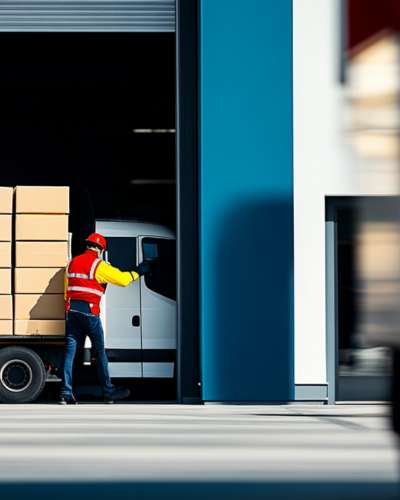
When your freight lands at the port, the work is far from over. Getting goods from a factory overseas to your U.S. warehouse — and then to your customers or retail partners — involves multiple handoffs. Third-party logistics providers (3PLs) handle those handoffs, but the term "3PL" covers a wide range of very different businesses. Choosing the wrong type, or assuming one provider does it all, is one of the most common operational mistakes importers make.
Here is a breakdown of the main 3PL categories, what they actually do, and where each one fits in a typical import supply chain.
1. Freight Forwarders
A freight forwarder coordinates the international movement of your cargo — ocean, air, or rail. They book space with carriers, prepare export and import documentation (commercial invoice, packing list, bill of lading, ISF filing), and act as your agent with customs brokers and port authorities.
What they do not do: Most freight forwarders do not warehouse your goods or handle last-mile delivery. They hand off the shipment once it clears customs and arrives at a domestic port or deconsolidation point.
When you need one: Every time you move a shipment internationally. This is not optional — you need a freight forwarder or a carrier that bundles forwarding services.
Key things to confirm before signing with a forwarder: their NVOCC or OTI license (FMC-registered), experience with your commodity and origin country, and whether they have an in-house customs broker or outsource that function.
2. Customs Brokers
A licensed customs broker handles the clearance of your goods through U.S. Customs and Border Protection (CBP). They classify your products under the correct HTS codes, calculate duties and fees, submit entry documentation, and manage any holds or exams.
Many freight forwarders offer customs brokerage as part of their service. However, for importers with complex product lines, high duty exposure, or frequent CBP exams, working with a dedicated customs broker — separate from your forwarder — gives you more specialized attention and accountability.
Licensing requirement: Customs brokers must hold a CBP-issued license. Always verify this before engaging one.
3. Domestic Warehousing and Fulfillment (Distribution 3PLs)
These providers receive your inbound freight after customs clearance, store inventory, and ship orders outbound — whether to retail partners (B2B) or end customers (B2C). This is what most people picture when they hear "3PL."
Within this category, there are important distinctions:
- Retail compliance 3PLs specialize in routing guide requirements, EDI integration, and labeling standards for big-box retailers. If you sell to Target, Home Depot, or similar accounts, you need a 3PL that understands vendor compliance chargebacks.
- B2C fulfillment 3PLs focus on high-volume, small-parcel shipping with carrier rate optimization. These are less relevant for pure wholesale importers.
- Bulk and pallet storage 3PLs handle large SKU counts or oversized items and are better suited for industrial, hardware, or heavy goods importers.
Pricing models vary significantly: some charge per pallet stored per month, others per pick/pack/ship. Get a full rate card and model it against your actual order profile before committing.
4. Drayage and Intermodal Carriers
Drayage carriers move containers from the port to a nearby warehouse or rail ramp — typically a short-haul move measured in miles, not days. This step is often invisible to importers until there is a chassis shortage or port congestion and your container sits demurring at $150–$300/day.
Drayage is usually arranged by your freight forwarder, but it is worth knowing which dray company is being used and whether they have strong relationships at your specific port (Los Angeles, Long Beach, Savannah, etc.).
5. Last-Mile Delivery Providers
For importers who ship directly to end customers or job sites — particularly in furniture, equipment, or building materials — last-mile carriers handle the final delivery leg. This includes white-glove services (inside delivery, assembly, debris removal) and threshold delivery.
Standard parcel carriers (UPS, FedEx, USPS) are not equipped for freight items over 150 lbs or items requiring special handling. Regional last-mile providers and white-glove networks fill that gap.
6. 4PL Providers (Lead Logistics Partners)
A fourth-party logistics provider (4PL) does not operate warehouses or trucks — they manage your entire logistics network on your behalf, coordinating multiple 3PLs, carriers, and technology platforms. They function as an outsourced supply chain management layer.
For most small-to-mid-size importers, a 4PL is unnecessary overhead. They become relevant when you have multiple origin countries, several distribution points across the U.S., and the internal team to manage the relationship.
Choosing the Right Combination
Most importing brands need at minimum three types: a freight forwarder (with customs brokerage capabilities), a drayage carrier, and a domestic warehousing/fulfillment 3PL. As volume and complexity grow, you may add a dedicated customs broker, last-mile provider, or retail compliance 3PL.
The mistake to avoid is assuming any single provider covers all of these functions end-to-end. Ask every prospective 3PL exactly where their service begins and ends — then make sure someone is accountable for each handoff in between.